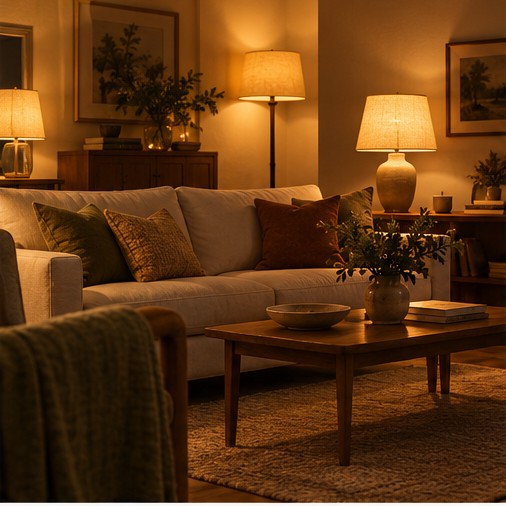
A ceiling light can illuminate the whole living room and still leave a reading chair in shadow. Before buying another fixture, spend one evening checking the seats you actually use.
Check the light from your usual seats
Sit in your reading chair with a book, then look toward the television from the sofa. You may need more light on the page but less glare on the screen or other glossy surfaces. Try moving an existing lamp behind or beside the chair, keeping the bulb out of your direct line of sight. Check the result from every regularly used seat and keep enough general light for the route through the room.
Compare the bulbs you already own
If one lamp looks blue-white and another looks amber, check their packaging or markings before replacing either. Bulb color and brightness are separate choices. A matching light appearance can make nearby fixtures feel more settled, but the reading lamp still needs enough light for the task.
Make controls convenient
A lamp is less useful when reaching its switch requires moving furniture. Place controls within comfortable reach and keep cables out of walking routes. If you use dimming, confirm that the lamp, bulb, and dimmer are compatible. For rental-friendly changes, start with portable fixtures instead of altering wiring or adding electrical fittings.
Use fixtures safely
Follow the fixture label for the correct bulb type and maximum wattage. Keep shades and lamps stable, inspect cords, and avoid routing cables under rugs or where doors can crush them. Do not use extension cords as a permanent substitute for suitable outlets. Fixed wiring and unfamiliar electrical work belong with a qualified professional.
Check the arrangement in the evening
Turn on the lamps you expect to use for reading, conversation, or television. Check the room from each seat and walk to the door. If a table or doorway disappears into shadow, keep enough general light on. Move one lamp and repeat the check before ordering anything.
Leave a Reply