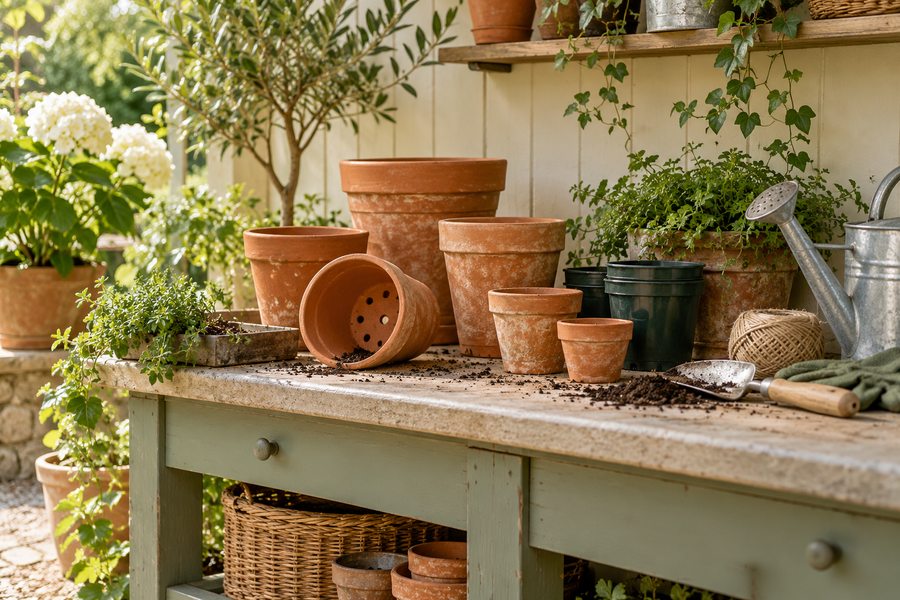
A pot that looks right on the patio can still be awkward to water or too heavy to move once filled. Check the drainage, mature plant size, and final position before choosing it.
Choose for the grown plant
Use the mature size of the plant or crop to guide the container choice. A small nursery plant can need much more root space later. Check crop-specific guidance rather than judging by the diameter of the pot it arrived in.
Check the drainage arrangement
Conventional pots need an appropriate way for excess water to escape. Inspect drainage holes before filling the container. A decorative outer pot can hold a draining inner pot, but you need access to remove collected water. Self-watering systems have different requirements; follow their instructions.
Compare materials practically
Think about how easily you can move the empty and filled container, and how exposure may affect it. Terracotta, plastic, and other materials behave differently. Durability, local weather, and your ability to inspect moisture matter more than choosing one material for every plant.
Choose a stable surface and account for the weight of wet mix and mature growth. Check balcony rules and load limits before creating a large collection. Avoid exposed edges and improvised railing attachments. Leave room for drainage without sending runoff onto neighboring spaces.
Use a suitable growing medium
Choose a mix intended for the plant and container arrangement. Do not assume soil dug from the garden will perform like potting mix. For edible growing, use clean containers suitable for that purpose and avoid containers previously used for chemicals.
Before filling it, check that you can reach the mix and remove runoff without stretching over another plant. Decide whether you will need help to move the filled container.
Leave a Reply