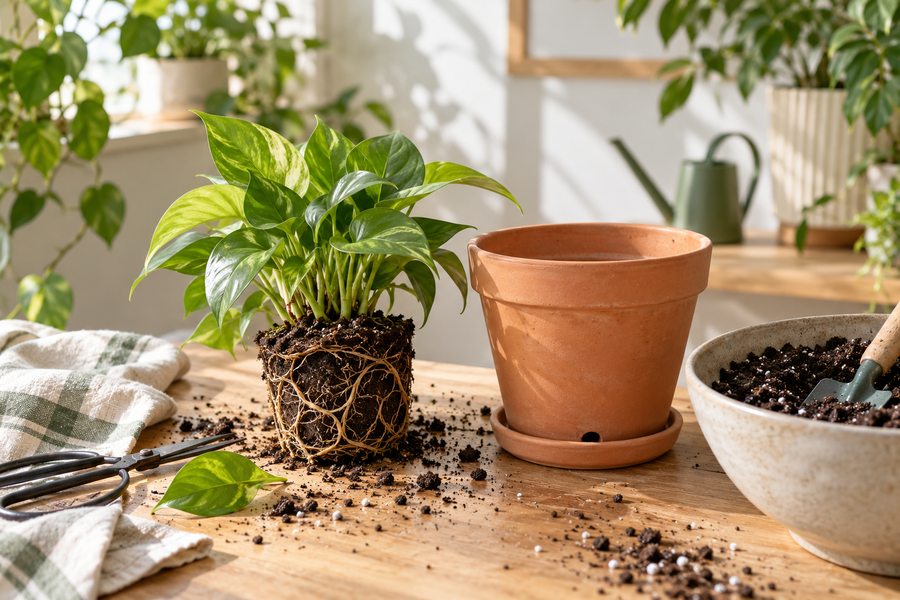
Roots circling a crowded pot are a stronger reason to repot than a slow week of growth. Get the new container and mix ready before taking the plant out, so the roots are not left exposed while you search for supplies.
Inspect the rootball before choosing the pot
Roots coming through a drainage hole are a clue, but inspect the rootball when you can do so without damaging the plant. If the mix is tightly wrapped in roots, more space may help. If there is plenty of unused mix, investigate light and watering before moving to a larger pot.
Prepare before removing the plant
Cover your work surface and gather a clean pot, appropriate potting mix, and water. Read care guidance for the species, especially for orchids, succulents, and other plants that need specialized mixes. Keep discarded mix away from children and pets, and wash your hands afterward.
Select a container with drainage and enough room for growth without surrounding a small rootball with a large volume of wet mix. A decorative outer pot can hide a practical nursery container, provided the inner pot can drain and be removed for watering.
Handle the roots gently
Ease the rootball out while supporting it rather than pulling on leaves or stems. Inspect the roots and loosen crowded outer roots carefully when appropriate for the plant. If you discover extensive decay or an unfamiliar problem, seek species-specific advice rather than proceeding as though the plant is healthy.
Keep the planting depth consistent
Position the plant so it sits at roughly its previous depth, leaving room below the rim for watering. Add mix around the roots and settle it gently without packing it hard. Keep the crown or stem base from being buried deeper than the plant requires.
After repotting, note when the mix dries enough for that species to need water. The old schedule may no longer suit it. Keep the plant in appropriate light and resist adding fertilizer simply because it has moved; the new mix may already contain nutrients.
Further reading
University of Maryland Extension: potting and repotting indoor plants.
Leave a Reply