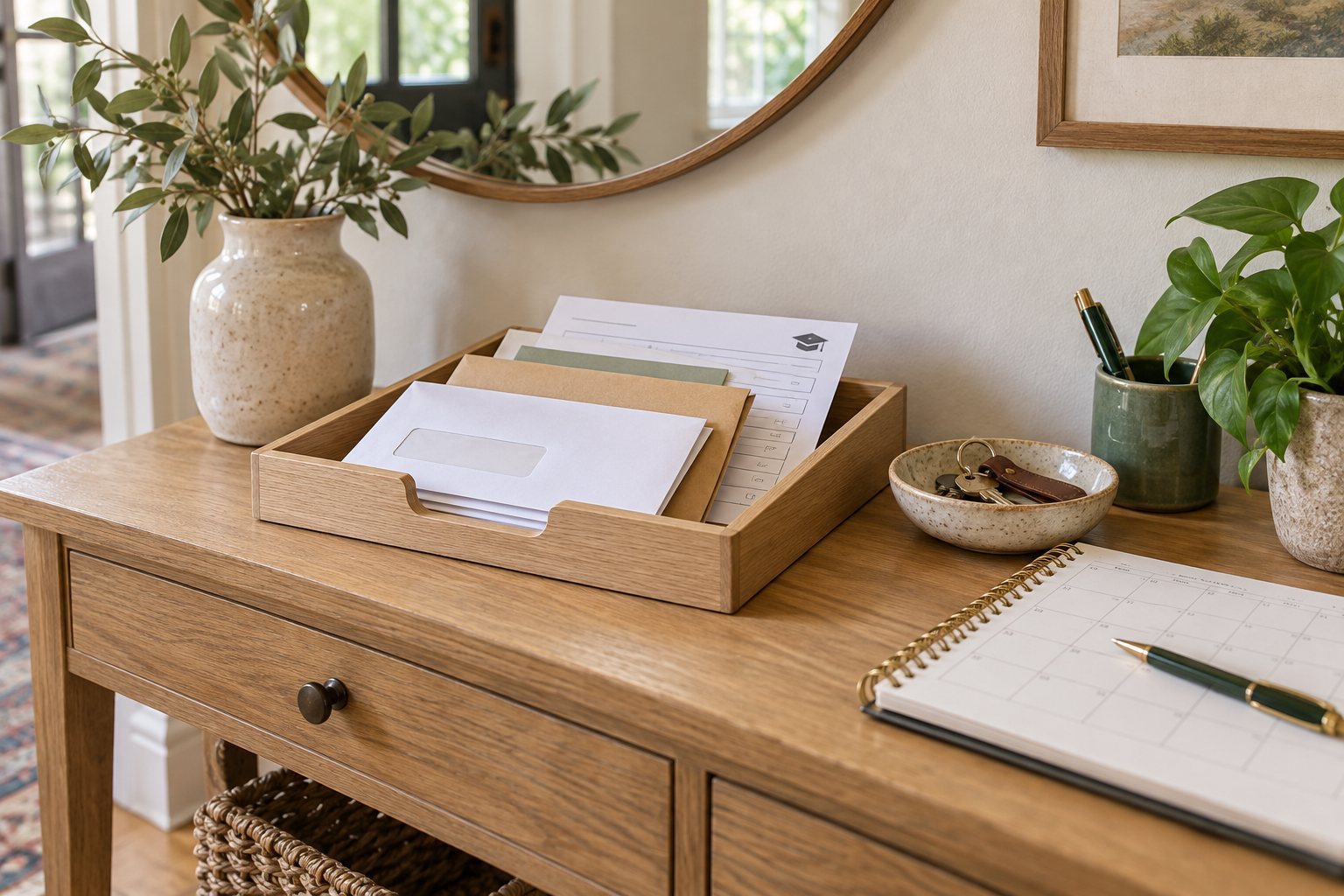
A home maintenance list can become a second job if it tries to cover every possible task at once. A more useful calendar starts with the things that protect your home, the chores that are easy to forget, and the time you actually have. Keep it small enough to check during an ordinary week.
Start with the reminders you already have
Gather appliance manuals, service notes, warranty information, and any reminders you have saved in a phone or paper planner. Look for tasks with a clear interval or season attached. Smoke and carbon monoxide alarm guidance, heating equipment instructions, and water filter schedules should come from the product maker or relevant local guidance; requirements and recommended intervals can vary. Copy the instructions that apply to your home instead of relying on a generic checklist.
Make a separate list for repairs you have noticed but not handled: a slow drain, a loose handle, a sticking window, or a stain that needs watching. A maintenance calendar should help you remember these items, but it should not replace an urgent repair. Address active leaks, electrical concerns, or other safety issues promptly with qualified help when needed.
Choose a home for the calendar
Use one place you will see: a wall calendar near the household paperwork, a notes app, or a simple spreadsheet. The tool matters less than being able to find it. Add recurring tasks as reminders with a short label and the source of the instruction, such as “replace filter — check furnace manual.” If a task needs a receipt, model number, or service contact, keep that information nearby rather than burying it in a long note.
Give each reminder a useful time window. “Check outdoor faucets before the first hard freeze” is more helpful than a fixed date when weather differs from year to year. For seasonal tasks, add a reminder to review local forecasts or the relevant equipment instructions. Do not assume that a schedule written for another climate or type of house applies to yours.
Sort tasks by how often they come up
Keep the regular list short. Monthly reminders might include checking visible areas under sinks for moisture, testing items according to their instructions, and looking over the calendar for upcoming service. Seasonal reminders can cover tasks such as clearing leaves from accessible outdoor areas, checking window screens, or preparing garden tools for storage. Add only jobs that fit your home and are safe to do yourself.
Some maintenance is annual or tied to service visits. Put those items in a separate section so the monthly view stays readable. If a professional handles the work, record the company, date, and any follow-up recommendation. That creates a useful history without asking you to remember what was discussed months later.
Break a large job into a first step
“Organize the garage” is not a calendar task; it is a project. Start with a specific action such as clearing one shelf or sorting one box for fifteen minutes. The same approach works for paperwork, closet maintenance, and small repairs. A short, defined step is easier to schedule and easier to finish.
Estimate time honestly. If you have a busy week, move a nonurgent task to the next open slot rather than letting a missed date make the whole plan feel broken. Keep urgent repairs separate from optional improvements, and do not try to stack several messy jobs into the same afternoon.
Do a quick monthly review
Set aside ten minutes near the start or end of each month. Remove tasks that no longer apply, add notes from completed work, and move unfinished items to a realistic date. If the same task keeps moving, ask whether it belongs on the calendar, needs a smaller first step, or should be assigned to a service professional.
A short review also helps you spot costs coming up. If a service visit or replacement part is likely, add a reminder to check the budget or request an estimate. That gives you time to plan instead of dealing with every expense as a surprise.
Keep the system easy to hand off
If more than one person helps care for the home, make the calendar visible and use plain labels. Mark who is handling a task only when that prevents confusion. Store manuals and service details where another household member can find them. A plan that depends on one person remembering every detail is fragile.
At the end of the year, keep the useful records and clear out old reminders. The calendar should reflect the home you live in now. Start with a few well-chosen tasks, then add only what you learn you need. It is easier to maintain a modest list than to recover from an ambitious one that stopped being used. A note about what you completed can make the next review easier.
Leave a Reply