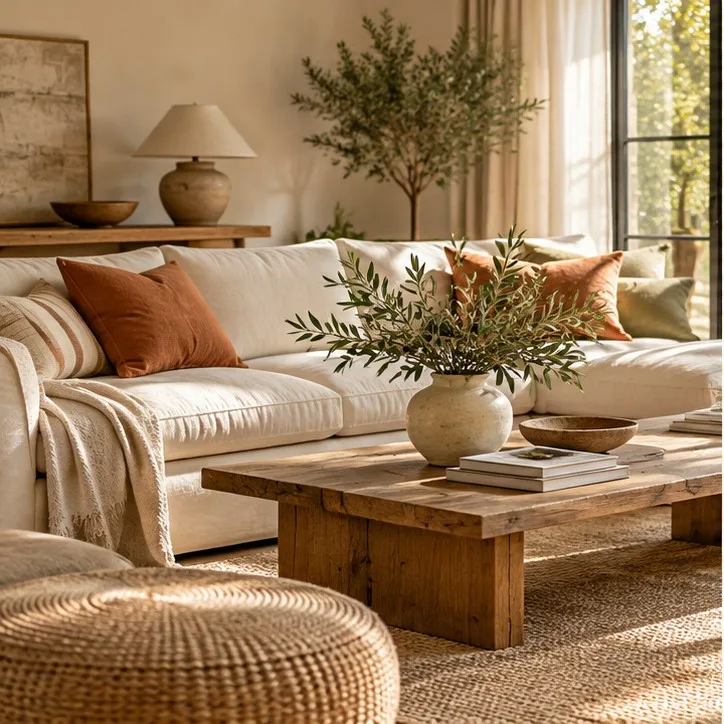
Wood finishes can vary and still feel at home together. Begin with the pieces that take up the most visual space, then repeat a tone in smaller details. That gives the room a thread without making everything look like a matching set.
Begin with the largest wood surface
Look at the floor, cabinets, built-in shelves, or the dining table you plan to keep. Note whether the finish reads light, medium, or dark, and whether it looks golden, red, gray, or neutral. You do not need to identify the species. The color and overall warmth are enough to guide the next choices.
Then take stock of the other wood pieces. A chair leg or small frame may fade into the background; a large coffee table will draw more attention. Decide which pieces should anchor the room and which can play a supporting role.
Repeat a finish in smaller details
Choose a wood tone to echo in at least two places, such as a side table and picture frame. The pieces do not need to match exactly. Similar warmth or depth can connect them.
Keep larger pieces close in warmth, then use a smaller item to introduce contrast. A pale oak floor can sit comfortably with a medium walnut table when warm accents appear elsewhere in the room. If the woods are far apart in color, repeat one of them in a small object before introducing another finish.
Compare undertones in daylight
Wood tones with different depths can work together when their undertones suit each other. Golden and honey shades tend to sit well beside other warm finishes. A cool gray-brown floor may feel unsettled beside a strongly orange piece, especially when both cover a large area. Place samples or movable pieces together in the room’s daylight before deciding; store lighting can shift their appearance.
A rug, upholstery, or wall color can soften the transition between finishes. A rug under a dining table separates chair legs from the floor. A neutral sofa can keep a dark coffee table from becoming the room’s only strong contrast.
Use shape and texture for variety
When several pieces have similar colors, vary their shapes and surfaces. Try a smooth table beside a woven basket, or a polished surface with matte ceramics. Texture adds interest without bringing in another strong wood tone.
If the finishes already vary in lightness, keep the shapes simple. Too many ornate details and high-contrast grains can make a small room feel crowded.
Check the arrangement from the doorway
Move smaller objects together temporarily and look at the room from the entrance. If a finish seems isolated, repeat it elsewhere or move it closer to a related tone. If the dark pieces gather in one corner, spread a lighter item into that area or shift a dark accent across the room.
A daylight photo can help you judge the balance. If one large piece dominates, try a rug, lamp, or nearby color to soften the contrast before replacing the furniture.
Leave a Reply