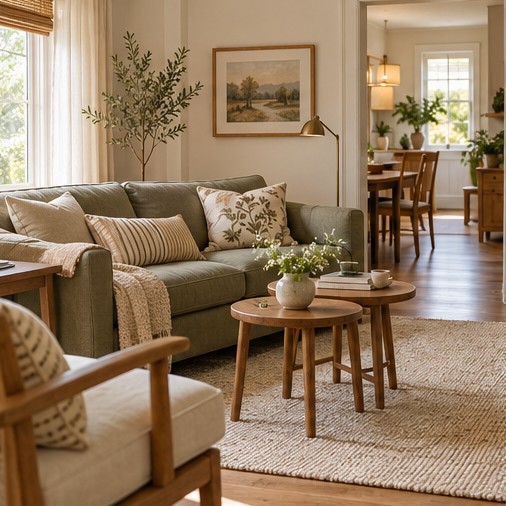
A small living room often feels cramped because a table or chair sits in the route everyone uses. Work out that route first, then arrange the seats around the way you spend time in the room.
Decide what gets the best seat
If most evenings are spent watching television, check the screen view from the main seats. If the room is used for conversation, make sure people can face one another without twisting. A desk used once a month should not claim the most convenient corner by default.
Draw the fixed features first
Make a simple plan showing doors, windows, outlets, heaters, and any permanent fittings. Measure the furniture you intend to keep. Mark the main route through the room and avoid placing furniture where it blocks door swings or equipment that needs clearance. Follow manufacturer guidance around heating appliances rather than treating every empty corner as usable space.
Add tables after the seating works
Place the sofa and the chairs you use, then sit down with a mug or book. Notice where you need a surface within comfortable reach. Try a table you already own before assuming a larger coffee table will help; its footprint may be the reason the route feels tight.
Pushing every item against a wall does not always produce a better layout. A small shift can improve conversation, screen viewing, or access to a curtain. Test alternatives with the furniture you have. Sit down and walk the routes rather than judging the plan only from above. Keep essential exits and accessible routes clear.
Let storage serve a specific need
List what truly belongs in the room. Store frequently used items where they can be reached without moving another piece of furniture. Closed storage can reduce visual distraction, while a small open shelf may suit books you use often. Anchor storage furniture according to the manufacturer’s instructions; a visually light unit can still tip.
Live with the change before decorating it
Leave the arrangement in place for a few ordinary days. Watch for the table everyone moves, the curtain no one can reach, and the chair you squeeze past. Shift the piece causing the problem. Decorative objects can wait until the room is comfortable to walk through.
Leave a Reply