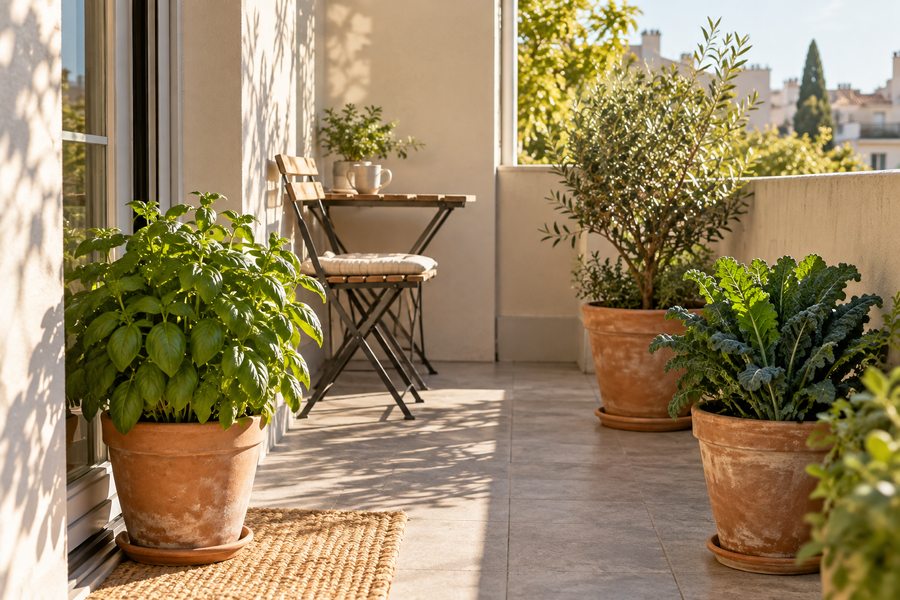
Before filling a balcony with pots, spend a day watching where the sun lands and how the wind moves through it. Three reachable containers with a clear route to the door are a useful first season’s garden.
Watch the sun at breakfast and later in the day
Note which corner gets direct sun, which is shaded by the building, and whether the afternoon light is stronger than the morning light. Photograph the same spot at different times if it helps. Those observations narrow the plant choices more reliably than the balcony’s compass direction alone.
Check rules and capacity
Confirm building rules and any limits on container placement or loading before adding pots. Filled containers can be surprisingly heavy, especially after watering. If capacity is unclear, ask the building manager or an appropriate professional. Keep fire exits, doors, and access routes unobstructed.
Leave a watering route
Arrange empty pots before filling them. Open the door, walk through with a watering can, and check that you can reach each container. Begin with a few plants suited to the available light; add more after you know how much watering and care the space demands.
Use suitable containers with drainage and a potting mix intended for container growing. Account for where water will go, including neighboring balconies. Catch runoff where necessary, but do not leave conventional pots sitting in water. Keep wet surfaces from becoming slippery.
Keep plants secure
Place containers on stable surfaces away from exposed edges. Avoid improvising railing attachments or elevated shelves. Wind can affect both foliage and the stability of containers; sheltered positions and suitable plants may be more practical than trying to hold an unsuitable arrangement in place.
Check plants regularly for drying, pests, and damaged foliage. Learn from one growing season before expanding. Local Extension advice can help you choose plants for your climate and anticipate frost or extreme heat.
Further reading
University of Maryland Extension: growing vegetables in containers.
Leave a Reply