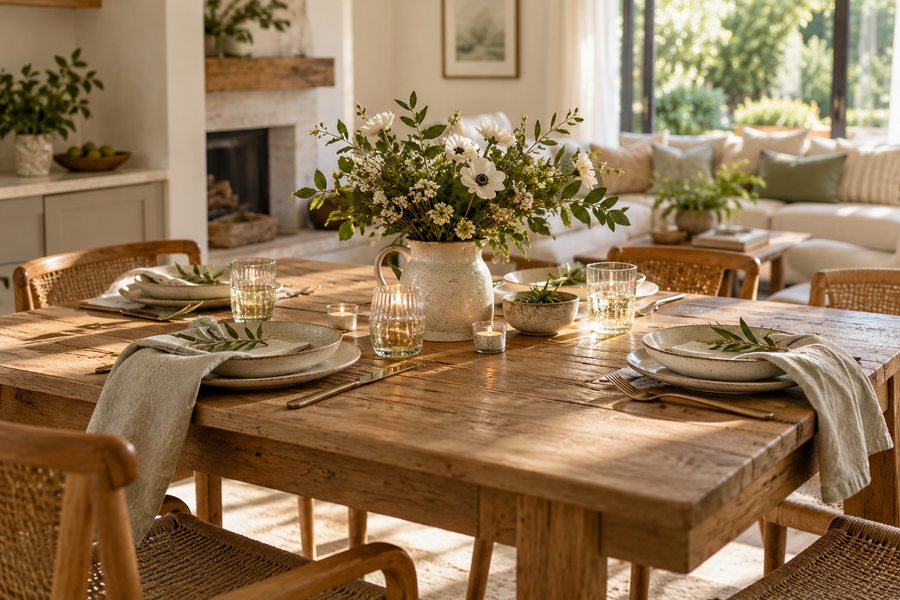
For a small dinner, a familiar main dish and a table set before the doorbell are often enough. Limit the jobs that need your attention at the same time, so you can sit down with the people you invited.
Start with the people
Confirm the guest count and ask about dietary needs early. Be honest about what you can accommodate, especially when serious allergies are involved. Choose a manageable gathering size and a serving style that fits your table and kitchen.
Avoid a menu with three last-minute pans
Choose a main dish you have made before and a side that does not need constant attention. Check which items can be prepared ahead and stored safely. Write down the last few cooking steps; if everything must happen in the final ten minutes, change one dish.
Put out plates, cutlery, water glasses, and the serving utensils each dish will need. Make space for coats and check bathroom supplies. Keep the centerpiece low and small enough that it does not compete with the food or block conversation.
Serve smaller amounts
Put out modest portions and replenish as needed rather than leaving everything on the table for the entire evening. Keep perishable food at safe temperatures. USDA guidance calls for refrigerating perishables within two hours, or one hour when the temperature is above 90°F.
Make conversation comfortable
Choose seating that people can reach easily and keep paths clear. Background music should allow normal conversation. Keep serving space within reach of the guests using it.
Have suitable containers ready and refrigerate leftovers promptly. Label stored food when useful and follow safe storage guidance. Accept help with a small task if offered, then leave less urgent tidying for later so the evening can end naturally.
Leave a Reply