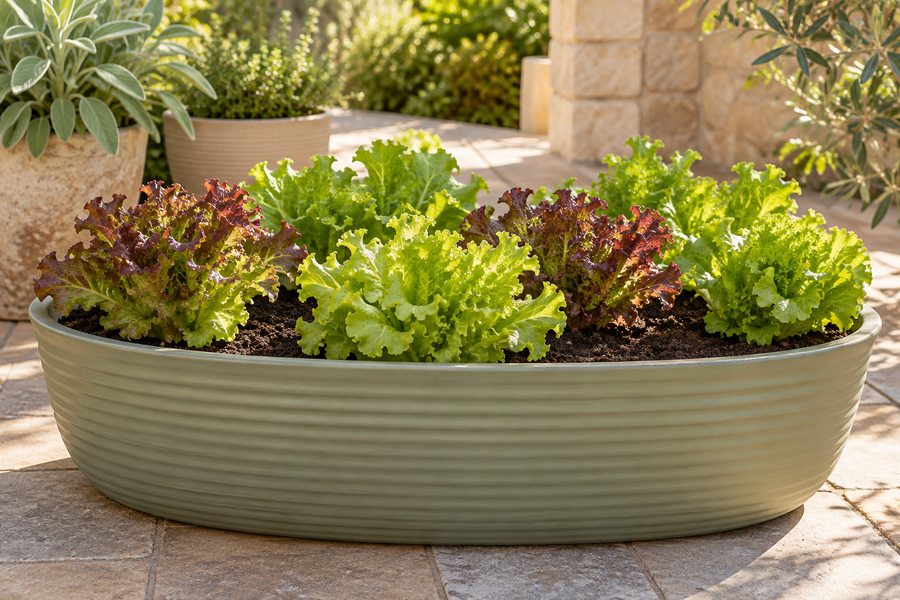
Looseleaf lettuce gives you a small harvest without needing a vegetable bed. Choose the sowing season for your climate first, then use the seed packet to plan spacing in a clean, draining container.
Choose a crop and season together
Looseleaf lettuce is a practical small-container project when local conditions suit it. Read the seed packet and local Extension guidance for planting timing. Heat can change lettuce quality and encourage bolting, so do not assume midsummer is the best starting point everywhere.
Prepare a food-safe container
Use a clean container made for edible gardening, with drainage and adequate root space for the variety. Avoid containers with a history of chemical storage. Set the planter in a stable, accessible place before filling it, and consider its weight after watering.
Follow the packet for sowing depth and spacing, and put the date on a label. Keep the germination area appropriately moist. Once seedlings emerge, thin them as directed. Leaving every seedling in place can turn a small container into a tangle of plants competing for the same root space.
Keep care consistent
Check moisture and water the growing medium when needed. Containers can dry more quickly than garden beds, especially in wind or heat. Monitor drainage and follow appropriate feeding guidance. Use light and temperature observations to explain changes instead of responding to every slow day with more fertilizer.
Choose how you will pick it
For repeated harvests, take a few outer leaves while leaving the growing center and enough foliage for the plant to recover. You can also harvest a whole plant at the recommended stage for the variety. Stop expecting tender new leaves when the plant has reached the end of its useful cycle.
Keep the harvest clean
Use clean tools, keep pets away from edible growing areas, and avoid applying untreated animal manure to a small food container. Wash lettuce under running water before preparing it. Inspect the plants regularly and identify any pest problem before selecting a treatment labeled for edible crops.
Further reading
University of Maryland Extension: growing vegetables in containers.
Leave a Reply