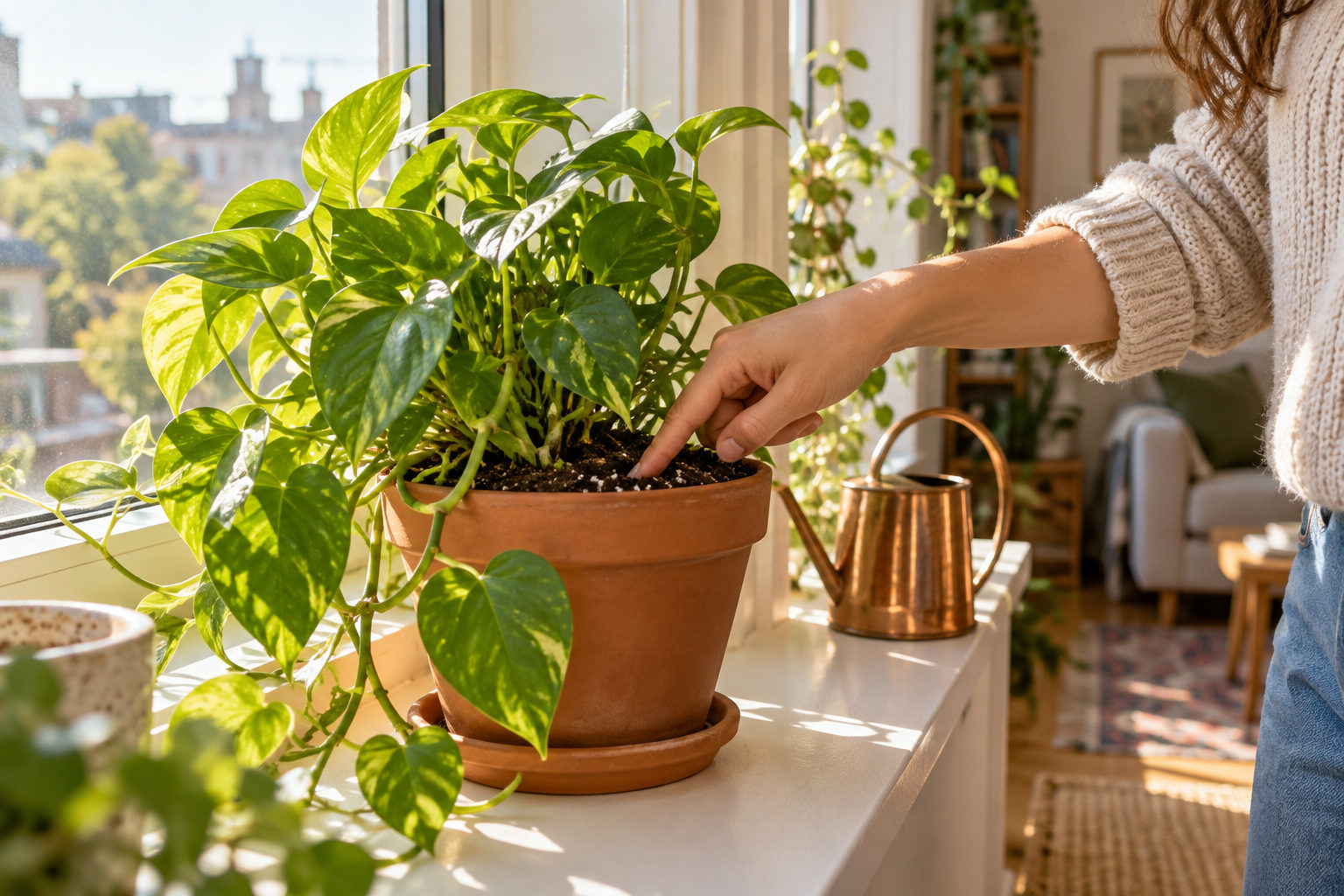
A watering schedule can be a useful reminder, but pots do not all dry at the same pace. Room temperature, light, pot size, and the plant itself all affect how quickly the mix dries. Before reaching for the watering can, check the soil and the pot.
Check below the surface
Touch the soil near the edge of the pot. If the top feels dry, press a finger a little farther down where you can do so without disturbing the roots. A dry surface alone does not tell you whether the root area needs water. For a narrow or delicate pot, use a clean wooden stick and pull it out to see whether damp mix clings to it.
Learn what suits the plant you have. Some houseplants prefer the mix to dry more between waterings; others need more even moisture. Follow the care guidance for that species, then use the soil check to decide whether today is the day.
Notice the weight of the pot
Lift the pot carefully, if it is manageable. A pot with damp mix often feels heavier than the same pot after it has dried. Over time, noticing the difference gives you another clue alongside the feel of the soil. For a large planter, skip this step and check the mix near the edge instead.
Look at the container and saucer
Make sure excess water has somewhere to go. If the pot has drainage holes, empty the saucer after watering so the pot is not left sitting in collected water. A decorative outer pot can hide standing water, so check inside it. If the plant is in a container without drainage, water cautiously and follow care advice for that plant and potting setup.
Water slowly, then check again
When the mix is ready for water, pour slowly over the surface rather than aiming at one spot. Pause if water runs straight through or pools on top. The mix may have pulled away from the sides or become difficult to wet evenly. Give it a moment, then add a little more and check the saucer.
Use room-temperature water if that is what you have on hand, and keep water off leaves where the plant’s care instructions call for dry foliage. The goal is to moisten the root area without leaving the pot in runoff.
Keep a note, not a rigid calendar
If you care for several plants, jot down the last time you watered each one. Treat the note as a prompt to inspect, not an automatic signal to pour. A plant near a bright window may need checking sooner than one in a cooler corner, and its needs can change as the room changes.
Once you know how the pot dries in its usual spot, you can check less often. The soil, the container, and the plant will tell you more than a date on the calendar.
Leave a Reply