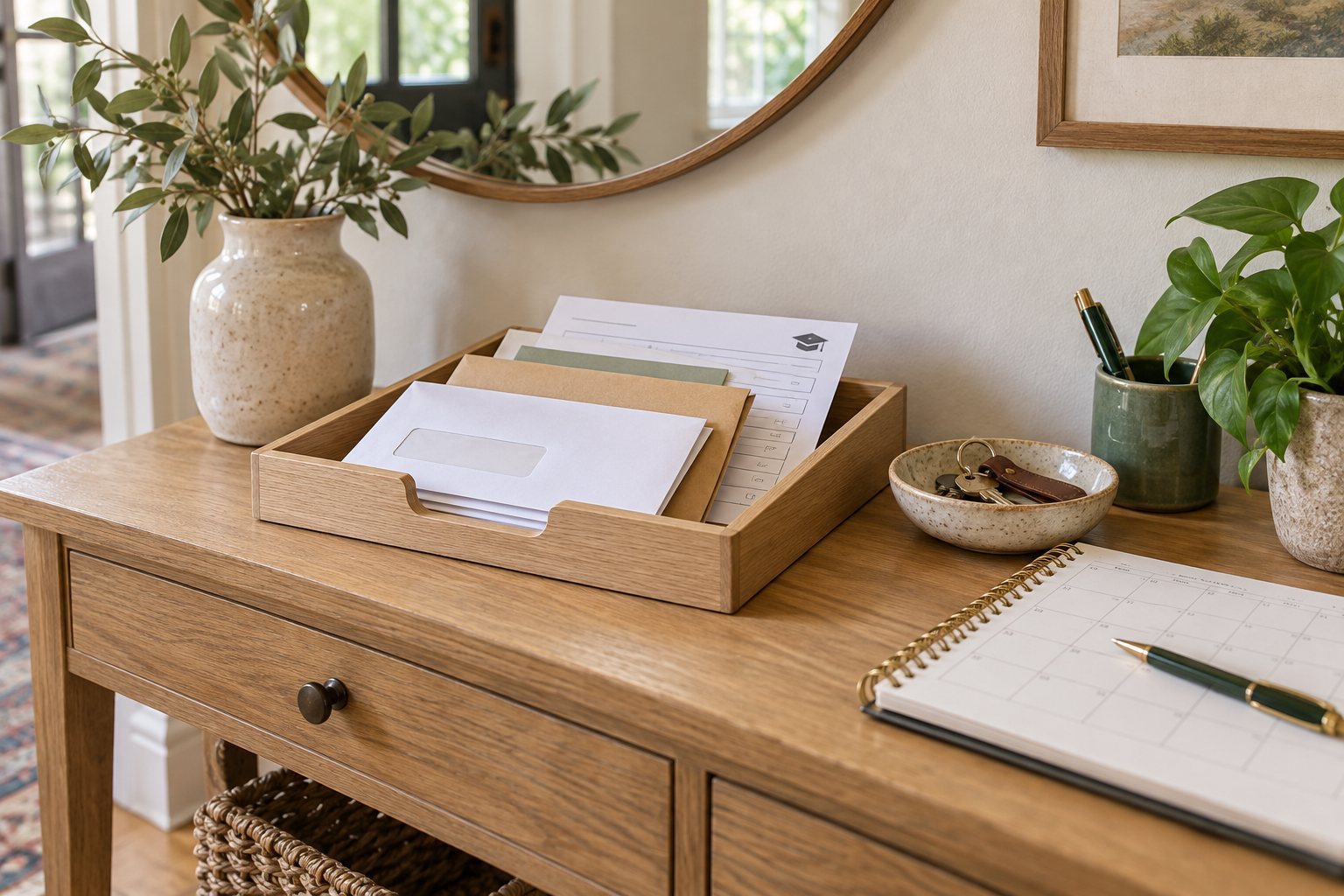
A permission slip on the counter is easy to notice until the mail arrives on top of it. Give papers that still need your attention one place to land, then choose a time to look through them. A shallow tray or a folder you already own is enough to start.
Decide what belongs there
Use the tray for papers that need an action: a form to complete, a letter to answer, or information to check. Put reading material elsewhere. Finished documents belong in your record storage, following whatever retention requirements apply to them.
Before adding a paper, say what you need to do with it. For example, a school form might need a signature and a return date. A letter may need a phone call. If there is no action left, keeping it in the tray will make the unfinished work harder to see.
Put deadlines somewhere you will check
Add the deadline to your calendar when the paper arrives, including a reminder early enough to handle it. Keep the document in the tray afterward. An urgent item needs attention before the next weekly review; the tray is only a holding place.
A small note can make the next step easier to remember. Write “ask which session is available” on a sticky note attached to the relevant form. Keep the original document readable and leave official forms unmarked where extra notes would cause a problem.
Choose a place that suits the papers
Keep the tray near the place where you sit down to handle household tasks. A shelf inside a cupboard may work better than the kitchen counter if the papers contain private information. Keep them away from spills and out of sight of visitors when necessary.
If several people handle the paperwork, agree who will check the tray. Use a folder for each person only when that makes responsibility clearer. A shared form still needs someone to take the next step, even if everyone knows where it is.
Review it beside your calendar
Pick a weekly moment that already has a little breathing room. Bring your calendar and anything you normally use to complete the tasks. Work through the tray from the top, checking deadlines before choosing a job.
Complete a straightforward task if you have what you need. For something that takes longer, put a specific action on your calendar and return the paper to the tray. If you are waiting for a reply, note when you contacted the person and when you intend to follow up. You should be able to tell why the paper is still there without reading it from the beginning again.
Move finished papers out
Once a task is complete, decide where its record belongs. File what you need to retain and dispose of other papers appropriately, protecting personal information. Check the relevant requirements before discarding records; a weekly tidy is not a reason to throw away something you may need.
If the tray keeps filling, read the action notes during the next review. Several papers may be waiting for the same call, or an old form may have been replaced by a newer one. Resolve the duplicate work, then leave only the papers with a next step still outstanding.
Leave a Reply