November 23, 2026
By Clara Bennett
A living room rug needs to fit the way you sit, walk, and use the room. The right size brings the sofa and chairs into one comfortable group; the wrong one can make a generous room feel scattered or leave a small room awkwardly crowded. Before shopping, measure the furniture, mark a few possible rug outlines on the floor, and think through the parts of the room that see daily traffic. Those simple checks give you a more useful starting point than choosing a rug by color alone.
Measure the seating group first
Begin with the outside edges of the seating arrangement. Measure the sofa, chairs, and any ottoman in the positions where they normally sit. Include the gaps between pieces because the rug should relate to the group as a whole, not only to the sofa. If a chair is often pulled forward for reading or conversation, measure it in that position too. Write down the dimensions and sketch the room, including doors, windows, a fireplace, and the route people take between rooms.
Furniture measurements can be misleading when you look at each item separately. A sofa may seem wide enough to anchor a rug, while two chairs angled toward it extend the seating area much farther than expected. Measure the shape made by the whole group. For an irregular layout, note the widest and deepest points rather than trying to force the arrangement into a perfect rectangle. The outline does not need to be exact to the inch at this stage; it needs to reflect the real footprint.
Remember that furniture moves. If you regularly slide a chair back to stand up, account for the chair legs in that pulled-back position. If the coffee table shifts during family use, leave a little room around it. A layout that works only when every piece is pushed tightly together may feel inconvenient after a few days. The best measurements come from observing the room during an ordinary evening, not from arranging it for a photograph.
Choose how the legs will sit
There are three common approaches. A large rug can hold all the legs of the main seating. This creates a defined island and can work well in a spacious room where the furniture group has enough clearance around it. A medium rug can catch the front legs of the sofa and chairs while the back legs remain on the floor. This often ties the seats together without covering as much floor. A smaller rug can sit under the coffee table, but it needs to reach far enough toward the seats to feel connected to them.
Decide which arrangement suits the room before looking at colors and patterns. If you choose the front-leg layout, check that the rug reaches each main seat. When it touches only the sofa, the chairs may seem detached. For an all-legs layout, make sure the rug is large enough that furniture does not sit right on its edge. If only the coffee table will sit on the rug, use the tape test to see whether the seats still feel like part of the same conversation area.
These are starting points, not rules that override the room. A sectional, a pair of small accent chairs, or an open-plan living area may call for a different outline. Keep the visual relationship consistent: the rug should connect the pieces that belong together. If the sofa faces a fireplace and a chair sits at an angle, the rug can follow that broader seating shape instead of aligning with one wall.
Use painter’s tape to test the size
Painter’s tape makes a useful outline because you can move it without committing to a purchase. Mark the dimensions of a rug you are considering, then step back and look from the doorway and from the seats. Sit on the sofa, pull out a chair, and walk around the edge. Notice whether the corners interrupt a route or sit where a foot naturally lands. If the rug seems too small, extend the tape by a few inches at a time and compare the new shape.
Leave the outline on the floor for a day if the room gets regular use. People often discover a problem only after they carry laundry through the space, open a cabinet, or move a chair. Check that doors clear the proposed pile height and that the rug will not cover a floor vent. If a door swings over the area, measure its path. You may need to shift the outline, choose a lower profile, or select another size.
For a rug with a border or a strong repeating pattern, the overall dimensions are only part of the decision. The border might sit beneath furniture legs, or a central motif may land off-center relative to the coffee table. If the design is prominent, make a rough paper or tape mark for the pattern’s center as well as its outer edge. You do not need to predict every detail, but you can avoid a layout where the most noticeable part disappears under the sofa.
Keep useful floor around the rug
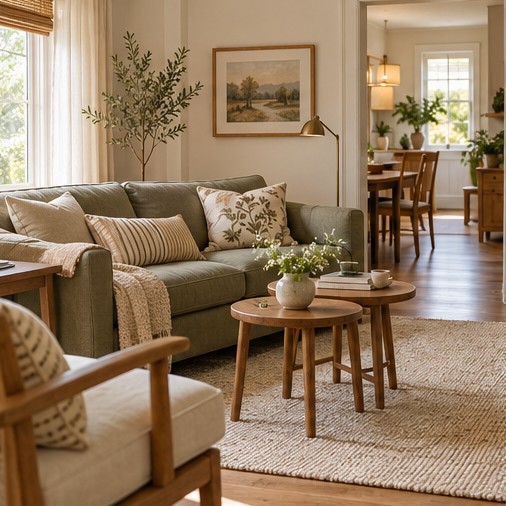
Look at the exposed flooring between the rug and the walls. A visible strip can help the room feel open, while a larger rug can suit a room where furniture sits away from the walls. The amount of floor that should show depends on the room’s proportions, the furniture placement, and the shape of the space. Rather than aiming for one universal border, compare the taped outline from several viewpoints and ask whether it frames the seating without making the walking area feel narrow.
In a compact living room, a rug that runs almost wall to wall can make the floor feel covered and may complicate cleaning around the edges. A small rug floating in the middle can also look out of scale. Try two different tape outlines and live with each briefly. In a large room, a larger rug can help define where conversation happens, especially when the living area shares space with a dining table or kitchen. The exposed floor can then help distinguish one activity zone from another.
Check the rug against nearby furniture, not just against the walls. A low bookcase, media console, or side table may sit near its edge. Leave enough space to open drawers and reach cords. If the seating area connects to a hallway, keep the rug from creating a narrow channel or an abrupt obstacle. A straight edge can help establish a route, but it should not force everyone to walk around the furniture in an unnatural way.
Account for doors, vents, and everyday routes
Make a short walk through the room and pay attention to where your feet land. The path from the entrance to the sofa, from the sofa to the kitchen, and from a seat to a side table all matter. Rug corners are easy to catch when they fall in a busy route. If a corner lands near a doorway, shift the rug or turn the layout before ordering. Keep the main walking line clear enough that people do not have to step over furniture or squeeze between a wall and the rug edge.
Floor vents and heating registers need attention too. A rug should not block a vent in a way that interferes with airflow or traps heat. Check the vent location against the outline and follow the guidance for your heating system if a rug will sit nearby. Similarly, keep access panels and frequently used floor outlets reachable. Small details are easy to overlook when a rug is rolled up in a store, but they can become daily annoyances once it is in place.
Consider children, older adults, and anyone who uses a cane or walker in the home. A secure rug pad and flat edges can reduce shifting and curling. Choose a pile that does not make it difficult to move a chair or cross the room. If a rug sits under a rolling desk chair or a dining chair used in the same open area, test how those wheels or legs move over the edge. The most attractive outline is not useful if it creates a trip point.
Match pile and texture to the room
Pile height changes how a rug feels and how furniture behaves on it. A low-pile rug is usually easier to vacuum and can make it simpler to move chairs. A deeper pile can feel soft under bare feet, though a chair leg may sink into it and a nearby door may drag. If the room contains a sofa with a low clearance, measure the gap beneath the frame before choosing a thick rug. Check table stability too, especially if a small table has narrow legs.
Texture affects the appearance as much as comfort. A flat weave can show a clear pattern and may work in a busy area, but edges need to stay flat and the surface can feel less cushioned. A looped texture can add visual interest, though some pets may catch claws in it. A plush surface feels different underfoot and can show marks where people walk. These are practical trade-offs, not reasons to rule out a style. Think about who uses the room and how much upkeep you are prepared to do.
Read the care label before buying. Some materials tolerate regular vacuuming and spot cleaning more readily than others. A rug in the main route from the front door may need more frequent attention than one in a quiet reading corner. If spills are common, learn what the maker recommends for cleaning and whether a professional service is required. Keep those instructions in a safe place. Avoid testing a cleaner on the visible center of a new rug; follow the manufacturer’s directions in an inconspicuous area.
Consider the pad and the floor beneath it
A rug pad can help limit movement and add a little cushioning, but the correct type depends on the rug backing and the floor. Hardwood, tile, and vinyl may each call for different materials. Check the flooring maker’s advice and the pad label before placing one. Some rubber or plastic materials can mark certain finishes, so do not assume that any non-slip pad is safe for every floor. If you are unsure, ask the flooring supplier or rug retailer which pad is compatible.
Trim the pad so it sits inside the rug’s edges and cannot be seen. A pad that is too large may peek out, collect dust, or create a raised border. One that is too small may not hold the rug as intended. Make sure the floor is clean and dry before placing the pad, then smooth the rug over it. If the rug still slides, check that the pad is the right material and size rather than adding tape or adhesive without checking whether it is safe for the floor.
Look for curled corners after the rug has been in place for a few days. A rug may relax as it unrolls, but follow the manufacturer’s instructions for flattening it. Avoid placing heavy objects on a corner if the rug maker advises against it, and do not use heat unless the care guidance permits it. A flat edge is more comfortable to walk over and easier to vacuum.
Choose color and pattern after the layout works
Once the dimensions feel right, compare color and pattern with the room. Look at samples near the sofa, floor, curtains, and wood finishes. Check them in daylight and under the lamps you use in the evening. A color that seems warm in a shop can look cooler beside a gray floor, while a subtle pattern may disappear in a room with a lot of visual texture. Take a photo of the space and review it beside the sample, but remember that a camera can shift colors.
Think about how much of the rug will remain visible. In a large layout, furniture may cover less of the design, so an all-over pattern can read clearly. With the front legs on the rug, parts of the pattern will sit beneath the sofa and chairs. A broad border or central medallion may be partly hidden. If you like a specific motif, ask whether the seller can show the full rug laid out, and consider how the furniture will cover it.
Pattern can help disguise everyday dust and marks, while a plain rug may make furniture and cushions stand out. The room’s existing surfaces matter. If the upholstery, curtains, and artwork already have strong patterns, a simpler rug can calm the composition. If most pieces are solid, a patterned rug can add detail. There is no need to match every color exactly. Repeat one or two tones already in the room, then let the rest of the rug bring a little variation.
Measure a rug you already own
If you have a rug that almost works, measure it and note what bothers you. Is the seating group split apart? Does the rug block a door? Does it slide when someone stands up? A specific observation is more useful than saying the rug feels wrong. Tape a proposed larger or smaller size over the existing outline and compare. If the problem is placement rather than dimensions, rotate the rug or shift the furniture before replacing it.
Check whether the old rug’s size is printed on its label or receipt, but measure it yourself too. Rugs can differ slightly from their listed dimensions, and the edge may have curled. Measure across the widest points, including any fringe if it affects how the rug fits. Record the measurements so you can compare them with the product details. For online orders, confirm whether the stated size includes fringe and whether the actual dimensions may vary.
Plan for delivery and placement
Before ordering a large rug, measure the route into the room. Check stair turns, narrow hallways, elevators, and the width of the doorway. A rolled rug can be bulky even when it fits the room once unrolled. If delivery includes placement, confirm what the service covers and whether someone needs to be home. Keep pets and small children away from the work area while furniture is being moved.
Clear small objects and take a quick photo of the furniture arrangement before moving pieces. That gives you a reference when setting the room back up. Place the rug pad first, then position the rug and use the tape outline as a guide. Move heavier furniture with help or use a method that protects the floor. Once everything is back, sit in each seat and repeat the routes you tested with tape.
Do not judge the color only under the packaging or shipping light. Let the rug lie flat and look at it through the day. Natural and artificial light can change how a color reads. Follow the care instructions for airing or flattening it. If the dimensions are wrong or the rug does not work with the room, check the seller’s return window and condition requirements before removing tags or treating the surface.
A quick checklist before you buy
Write down the seating group’s width and depth, the size of the rug outline that worked, and the clearances for doors and vents. Decide whether the furniture will sit fully on the rug, with only its front legs on it, or around a smaller coffee-table rug. Note the pile height that suits the door and chair legs. Check the material’s cleaning directions and verify that the pad is safe for the floor. Take the measurements with you when comparing products.
Then ask yourself a few practical questions. Can everyone walk through the room without stepping around an exposed corner? Does each seat feel connected to the conversation area? Can the coffee table sit steadily? Is there enough floor showing for the room to feel balanced? Will you be comfortable cleaning the material you chose? If one answer is no, adjust the outline before ordering. A little time with a tape measure and painter’s tape is easier than trying to make an unsuitable rug work after delivery.
When the rug arrives, the layout should feel familiar because you have already tested its footprint. Small adjustments are still normal. Move a chair a few inches, center the coffee table, or shift the rug to clear a door. Keep the care label and inspect the edges as the rug settles. The result should support the seating arrangement and the daily paths through the room, while leaving you with a surface you can maintain.
Leave a Reply