November 24, 2026
By Avery Reed
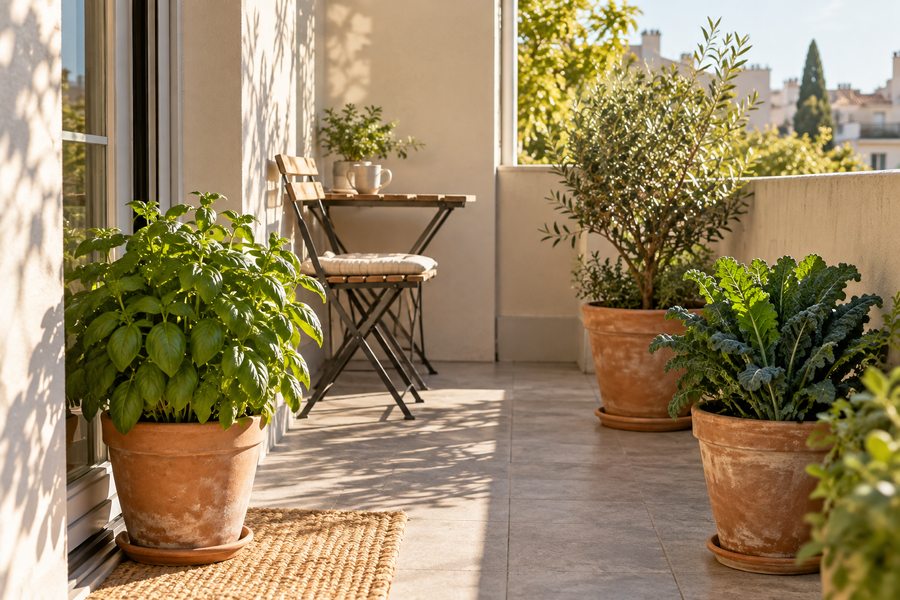
A balcony can hold a useful little garden without losing the space you need to sit, step outside, and reach the door. The arrangement works best when plants suit the light and wind the balcony actually gets, and when watering does not turn the walkway into an obstacle course. Before buying more pots, watch the space at different times of day, sketch a simple plan, and leave a clear route from the door to the place you use most.
Read the balcony through the day
Spend a few minutes outside in the morning, around midday, and later in the afternoon. Note where direct sun lands and how long it stays. A balcony can be bright without receiving hours of direct light, especially when a wall or overhang shades it. The sun may also shift across the floor as the day moves on. A quick note on your phone is enough: record the time, the sunny area, and which spots remain shaded.
Look up as well as down. A balcony above you, a nearby building, or a deep roof can change the light more than the direction the balcony faces suggests. Glass doors and pale walls can reflect light, while a tall railing can cast a narrow shadow. If you are choosing plants, compare those observations with the light guidance on the plant label or from a dependable growing reference. Labels use terms such as full sun and partial shade differently, so pay attention to the number of hours and the intensity described.
Do not make a permanent layout from one cloudy day. If the weather is overcast, repeat the check when it clears. Seasonal sun angles change too, so a spot that is sunny in late fall may be shaded in summer or the reverse. You do not need to predict every month before starting. Begin with a few plants that fit the conditions you can observe now, then keep notes about how they respond as the season changes.
Mark the route before placing anything
Open the balcony door all the way and notice how it swings. Then walk from the doorway to the chair, table, or railing you use most. Keep that path open. It is easy to tuck one pot near the door and then add another, until you have to turn sideways to get through. Mark the walking line with a piece of string or place empty containers temporarily. Walk through carrying a watering can, a tray, or a cup to see whether the route still feels practical.
Leave enough room to move a chair and reach behind a pot. A plant that looks fine against a wall may be difficult to water once a table sits in front of it. Put the plants you inspect or water most often within easy reach. Keep tools and a watering can somewhere they can be retrieved without lifting several containers. If you use the balcony for laundry, pets, or storing a folding chair, include those routines in the sketch.
Think about how many people use the balcony at once. A narrow space may need a smaller number of pots along one side, while a wider balcony might accommodate a planted corner and an open seating area. Leave room for someone to sit down without brushing past leaves. Where a door or window opens toward the balcony, check that foliage will not catch on it as it grows. Allow for mature plant size, not only the small nursery pot you bring home.
Choose containers that fit the plants
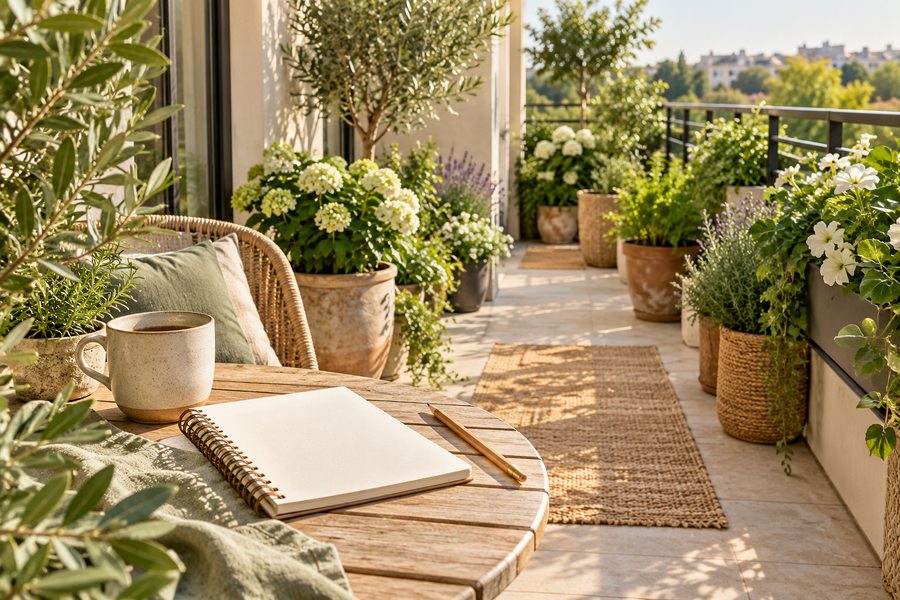
Container size should suit the plant and the space. A pot that is too small can dry quickly and leave little room for roots, while an oversized container can take up valuable floor area and hold more wet mix than you want to move. Check the plant’s care guidance for a suitable container size. If you are combining plants, choose companions with similar light and watering needs, and make sure the container has enough room for each one to grow.
Measure the pot’s outside width and height, including any saucer or feet, before placing it on a shelf or stand. Think about how it will look beside a railing, chair, or table. A tall, narrow pot may fit a corner but can be easier to tip in a gust. A broad pot can be more stable, though it occupies more floor and may be heavy when watered. If you expect to move a container, test its weight with the soil mix before filling it permanently.
Containers made from different materials behave differently. A lightweight pot is easier to reposition but may need a more sheltered location. A heavier one can be harder to move, particularly after watering. Dark surfaces can warm in direct sun. Glazed pots may hold moisture differently from porous materials. These are general tendencies, and the balcony’s own weather matters. Follow plant care instructions and check the soil rather than relying on a fixed schedule alone.
Drainage matters. Use containers with drainage openings when the plant and setup call for them, and use a saucer or tray to catch water where appropriate. Empty collected water after watering so it does not spill, stain the floor, or leave a pot sitting in water if the plant does not tolerate it. Confirm building rules about drainage before allowing water to run off the balcony. Avoid drilling into the floor or railing unless you have permission and know what lies beneath.
Group plants by care, not just appearance
Put plants with similar light and watering needs near one another. You can check a group in one pass without assuming every pot wants the same amount of water. A dry-loving plant can share a sunny area with another plant that prefers it, while a moisture-loving choice may need a different spot. Keep labels until you have learned the names and care requirements. If you remove them, write the names on a small stake or keep a note on your phone.
Leave a little space between foliage. Crowded leaves are harder to inspect, and you may miss yellowing, pests, or damage until the problem has spread. Air can move around the plants more easily when leaves are not pressed together. Space also gives you access to the soil surface. When several pots sit close together, position them so you can reach the back containers without dragging the front ones across the floor.
Think about height in layers. Lower pots can sit at the front of a group, with taller plants toward a wall where they do not shade smaller ones. A trailing plant may work on a stable shelf if its growth will not hang into the walking route or toward a shared space below. Do not attach a planter to a railing unless the building permits it and the attachment is secure. Use freestanding supports designed for the pot and surface.
Account for wind and sudden weather
Balconies can be windier than the room just inside. Notice which direction gusts come from and whether corners create a strong draft. Leaves that move constantly or stems that lean may be getting more wind than they can handle. Shift sensitive plants to a sheltered position, but keep an eye on the light there. A screen can change airflow, though any screen or structure may be subject to building rules and wind loads, so do not attach one without checking first.
Lightweight pots and tall plants deserve particular attention in exposed spots. Choose stable surfaces and avoid setting containers near an edge where they could be knocked or blown over. Keep objects secured without improvising ties to railings or shared structures. Follow local building guidance and the property’s rules about balcony items. If you rent, check the lease or ask the property manager before bringing in large planters, installing hooks, or changing the balcony surface.
Make a simple weather routine. Before a forecast of strong wind or heavy rain, move light pots to a sheltered area if you can do so safely. Remove loose saucers or tools that could slide. After a storm, check whether containers shifted, soil spilled, or leaves were damaged. A pot that remains stable in ordinary weather may need to be moved during a storm. Do not step onto an unstable stool or lean over a railing to adjust a planter.
Think carefully about weight
Soil and water add weight. A container that feels manageable when empty can become much heavier after it is filled and watered. Before placing large pots, raised beds, or dense materials on a balcony, check the property’s guidance and any stated load limits. If the information is not clear, ask the building manager or a qualified professional. Do not assume that a railing, ledge, or narrow shelf is designed to carry a garden.
Keep heavy containers on a stable surface, away from the edge and where they will not block drainage or access. If you need to move a large pot, empty it first when possible and get help rather than dragging it across the floor. Dragging can damage the surface and strain your back. Use pot feet or a suitable wheeled base only if the floor and container remain stable and the building permits it.
A smaller container can be a better choice than a large one if it is easier to maintain and reposition. Several light pots let you change the arrangement as the sun shifts, though they need more attention and can dry at different rates. If weight is a concern, choose plants and containers to match the information you have. The garden should fit the balcony’s safe use, not depend on guessing what the structure can hold.
Make watering easy to reach and contain
Place frequently watered plants near the door or watering can. If you must carry water across the balcony, keep the route clear and use a can that is comfortable to lift. Water slowly enough that the mix can absorb it rather than overflowing immediately. Check moisture at the level the plant’s care guidance recommends. The surface can look dry while the mix below remains damp, or a dense root ball can dry faster than its surroundings.
Containers of different sizes dry at different rates. A small pot in direct sun may need checking more often than a large one in shade, but conditions vary with wind, temperature, plant size, and soil mix. A calendar reminder can prompt you to inspect the pots, but it should not automatically mean watering. Feel the mix or use another method recommended for the plant. When watering, note which containers drain quickly and which stay damp.
Use trays to catch drips where they are useful, and empty them after watering. If your balcony has a shared drainage area, keep soil and leaves from washing into it. Sweep up spilled mix before it dries. Check that water does not run onto a neighbor’s balcony or damage the building below. A watering routine that respects the space makes the garden easier to keep and avoids surprises for other residents.
Set up a small edible garden
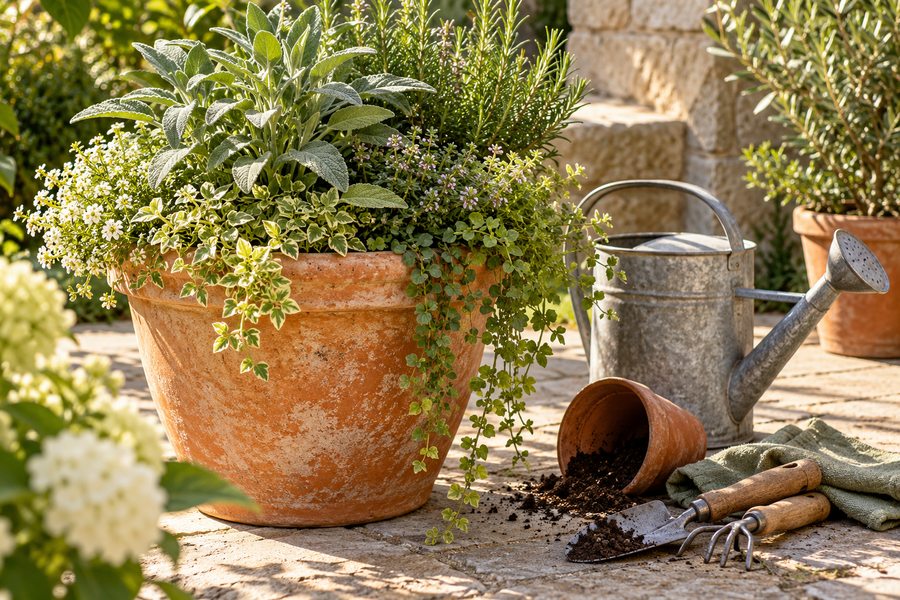
Herbs and compact vegetables can work in containers when their light, container, and watering needs match the space. Choose a few plants you expect to use. A pot of herbs by the door may be more convenient than a larger collection at the far end of the balcony. Check the label for mature size and spacing, and avoid planting several vigorous growers together in a container that is too small.
Keep edible plants away from any area where pets relieve themselves, and use potting mix suited to containers. Follow the seed packet or plant label for planting depth, spacing, and light. If a plant needs support, use a stake or small trellis that fits securely inside its container. Confirm that it will not interfere with a neighboring unit or extend beyond the balcony. Tie stems loosely with soft garden ties where needed.
Harvest a small amount at a time and follow the plant’s guidance so it can continue growing. Remove yellowing leaves and check the undersides for pests when you water. If you see a problem, identify it before using a treatment, especially on edible plants. Follow the product label and any local rules. A few well-maintained containers can provide fresh leaves for cooking without turning the balcony into a storage area for pots you rarely use.
Arrange the balcony in layers
Start with the largest items: the chair, table, storage box, or laundry rack. Place them where they will be used and test the door and walking route. Then add the larger pots along a wall or in a corner. Set smaller containers where they receive the right light without sitting in the path. Finally, add a shelf or stand only if it is stable, allowed, and still leaves room to move through the space.
Use one or two heights rather than raising every pot. A low group can make the floor feel open; a single stable stand can bring a smaller plant closer to eye level. Keep the tallest foliage from blocking the view or shade that another plant needs. If you use a railing planter, follow the building’s rules, use hardware made for that purpose, and check it regularly. Never rely on a loose hook or a decorative bracket to hold a heavy wet container.
Try the arrangement with empty pots first. Sit down and see what the plants will look like from the chair and from indoors. A cluster that looks balanced from the doorway may crowd the table once you sit. Move pots around until the route, reach, and view all work. Take a photo from the same angle so you can compare later, especially when plants grow and the arrangement changes.
Make a small balcony feel calmer
Containers can look more settled when a few features repeat. You might use pots with a similar finish, keep a consistent gap along one wall, or group plants in a defined corner. A repeated shape can help the arrangement feel deliberate, but every pot does not need to match. A mix can work if the plants and container sizes remain easy to care for. Keep the number of materials manageable so you are not storing spare saucers and trays in every corner.
Use color with the rest of the balcony in mind. A bright pot can draw attention to a shaded corner, while foliage and neutral containers can recede against the wall. Look at the setup from inside the room as well as outdoors. The balcony often becomes part of the view through the glass, so a clear arrangement can make the room feel less cluttered. Keep cleaning supplies and soil bags out of sight, but leave them accessible enough that you will actually use them.
Plants change as they grow. Leave a little room for mature leaves and stems, and check the arrangement every few weeks. A plant that once fit behind a chair may begin to reach into the walkway. Prune only as appropriate for that plant, following its care instructions. If it outgrows the space, move it, divide it if suitable, or give it to someone with more room rather than forcing it into a crowded corner.
Care through changing seasons
As weather shifts, revisit the light notes and watering routine. Cooler weather may slow growth and reduce how quickly containers dry, while hot, windy days can dry small pots faster. Check each plant rather than assuming the whole balcony needs the same schedule. Bring sensitive plants indoors only if their care guidance calls for it and you have a suitable place. Clean the pots and remove plant debris before storing anything.
Before winter or a period of freezing temperatures, check what the plants and containers can tolerate. Some pots can crack if wet soil freezes, and some plants cannot stay outdoors in cold conditions. Follow the care information for each one. If you need to move containers inside, plan how you will carry them without blocking the door or damaging the floor. A lightweight grouping may be easier to bring in than one heavy planter.
In warmer months, inspect plants for drying, sun scorch, and pests more often. A position that worked in spring may receive stronger sun later. A shade cloth or screen can help in some situations, but follow the plant’s needs and the building’s rules before adding one. Keep anything that could catch wind secured appropriately. Small adjustments are usually enough: move a pot a little, change its watering check, or regroup containers with similar needs.
Keep the setup tidy without overworking it
Store a small brush, hand trowel, gloves, and watering can together in a container or cabinet if the balcony has room. Put soil and fertilizer in sealed containers that are appropriate for those products and keep them away from children and pets. Follow the product label for storage and use. Sweep up dry leaves and spilled soil before they collect around drains or corners. A brief weekly check is easier than a large cleanup after several weeks of neglect.
When you water, look at the leaves, stems, and soil at the same time. Remove fallen foliage, check whether a plant leans, and make sure the pot has not shifted. Turn containers only if the plant benefits from it and the setup remains safe. Do not leave tools where someone can trip over them. If the balcony is shared, keep your supplies within your own permitted area.
Some plants will not thrive in the conditions you have. If one repeatedly struggles despite following its care guidance, move it to a better spot or choose a different plant suited to the balcony. Keeping a plant alive should not require rearranging every pot each day. A smaller collection that matches the light and routine can be more satisfying than a crowded collection that asks for constant attention.
Test the layout before filling every pot
Leave the first arrangement in place for several days. Open the door, sit down, and walk through with a watering can. Check whether you can reach the back pots and whether leaves brush against the door. Look at the balcony at the times when you use it. If you have to move a chair every time you water, adjust the group before adding more plants. The empty space is part of the layout and should remain usable.
After planting, keep a simple note of where each container sits and how often you check its soil. You can mark whether it receives morning or afternoon sun and whether the pot dries quickly. Over a few weeks, the pattern becomes clearer. Move only the plants that need a change, and take care not to put a stressed plant into an entirely different condition all at once unless its health calls for it.
A useful balcony garden is one you can reach, water, and enjoy without stepping around it. Start with the light, leave a route from the door, and choose containers that suit both the plants and the space. Keep heavy pots and attachments within the building’s rules, contain drainage, and adjust the layout as weather and growth change. You can add another pot later if the first group works well.
Leave a Reply