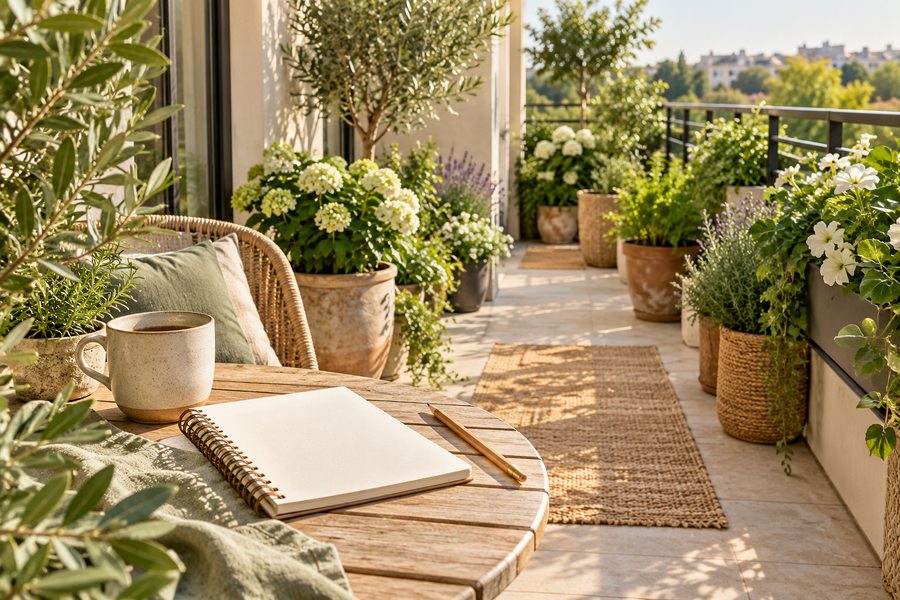
“Terracotta pot dry; shaded plastic pot still damp” is enough for a useful garden note. Record the detail that will help at the next check, rather than writing a diary entry every day.
Pick a simple format
Use a notebook, a basic note on your phone, or a printed sheet. Choose something you will actually check. The journal does not need decorative pages or daily entries; it needs enough detail to help you make the next gardening decision.
For each pot, record the plant name, planting date, container size, and position. Keep the nursery label or a photo of it. Add a plain description of the light, such as morning sun followed by shade, so the record still makes sense later.
Use observations you can compare
A short entry might read: “Tuesday: windy afternoon; balcony-edge pot dry; watered and drained; wall-side pot still moist.” Keep the observation separate from the diagnosis. “Leaves yellowing” records a change; “needs fertilizer” is a guess until you check the cause.
Write down repotting, moving, pruning, and feeding. For products, keep the label and record what you used according to its instructions. Avoid changing several things at once when you are trying to understand a problem.
Use photographs selectively
Take a photo from a similar position when you want to compare growth. Include the whole plant as well as a close view of a specific issue. If sharing photos for advice, keep private household details out of the image.
Read back before buying another plant
Look for the pot that repeatedly dries first, the corner where growth is weak, or the container you dislike reaching. Change one of those things. Use the previous entries to check whether the change helped.
Leave a Reply