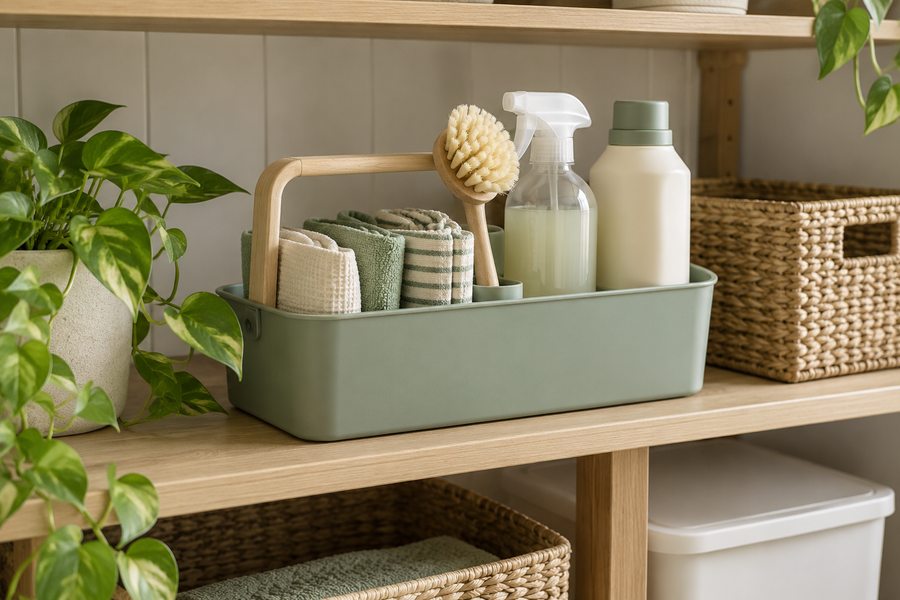
A cupboard full of half-used cleaners is hard to manage. Build the kit around the surfaces in your home and the jobs you do regularly, then keep each product’s instructions with it.
Make a surface list before a shopping list
Write down the flooring, counters, glass, and fabrics you clean. Check care instructions for natural stone, wood, or another finish that can be damaged by the wrong product. Cross off products you already have that are suitable for those tasks.
Use a few cloths and brushes you can identify easily, with bathroom tools kept separate from food-preparation tools. A different color or a clearly labeled storage space helps prevent mix-ups. Replace a worn brush when it no longer cleans effectively, rather than adding another beside it.
Choose products deliberately
Buy only what you need for the surfaces and tasks you have. Read labels for compatibility and safe use, including ventilation or protective equipment requirements. Do not mix products or create homemade combinations simply to use up leftovers.
Keep original containers
Store products with their labels and instructions intact. Avoid moving cleaners into drink bottles or unlabeled jars. If a product requires dilution, follow its directions and appropriate labeling and storage instructions.
Keep cleaners secured away from children and pets and separate from food. A carrying container can make a task easier, but it is not automatically a safe long-term storage place. Avoid leaving products out after finishing.
Review before buying more
Check what you already have and whether it remains usable according to its label. Dispose of unwanted products according to local instructions. Remove the empty or unwanted containers before making a shopping list.
Leave a Reply