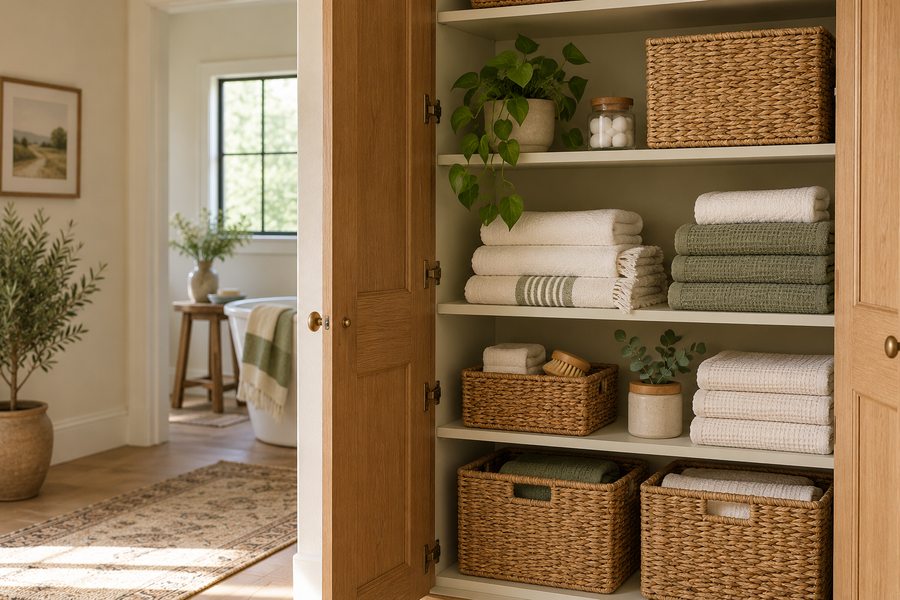
The useful linen cupboard is the one where you can pull out the right fitted sheet without unfolding three others. Sort by bed size and everyday use before worrying about how the stacks look.
Count what you actually use
Gather towels and bed linens by type. Separate everyday items from guest pieces and worn-out extras. Keep enough for your household’s normal washing cycle, then consider whether the rest earns its space. There is no single correct number for every home.
Make the bed size easy to see
Keep each sheet set together inside one of its pillowcases, or fold it as a set on a labeled shelf. Separate sizes that are hard to distinguish. Put the most-used set within easy reach and guest bedding farther back if it is used less often.
Let fabric dry completely
Put linens away only when they are clean and fully dry. A tightly packed cupboard is harder to inspect and rearrange. Leave enough room to remove one set without pulling out the stack above it.
Use the fabric’s washing and drying instructions rather than one setting for everything. Separate items when their care requirements differ. For special situations such as illness, consult appropriate guidance instead of assuming the ordinary routine is sufficient.
Give the unfolded load a place to land
Use one basket for clean, dry linens waiting to be folded. Empty it back into the cupboard as part of finishing the load. If several baskets accumulate, the shelf may be too crowded or the folding routine may need simplifying.
Check for unused pieces, mismatched sizes, and frayed fabric periodically. Repurpose or dispose of worn items thoughtfully according to local options. A small review when changing bedding is easier to maintain than repeatedly emptying the entire cupboard.
Leave a Reply